Maintained by the Pay As You Go Car Insurance editorial team · Lead editor Jordan Ellis · Reviewed
Answer in brief
Pay-as-you-go car insurance prices your policy on how much or how you drive instead of a fixed estimate. Pay-per-mile charges a monthly base plus a few cents per mile and saves 20–40% for drivers under about 8,000 miles a year. Behaviour-based telematics adjusts a conventional premium by a driving score and saves 5–30% for smooth, daytime drivers at any mileage. Coverage is identical to a standard policy. The who saves guide tells you which you are; how to compare shows how to put the quotes side by side with conventional ones.
Pay-as-you-go car insurancePay-per-mile pricingTelematics driving scoresLow-mileage savings
Two products, one idea
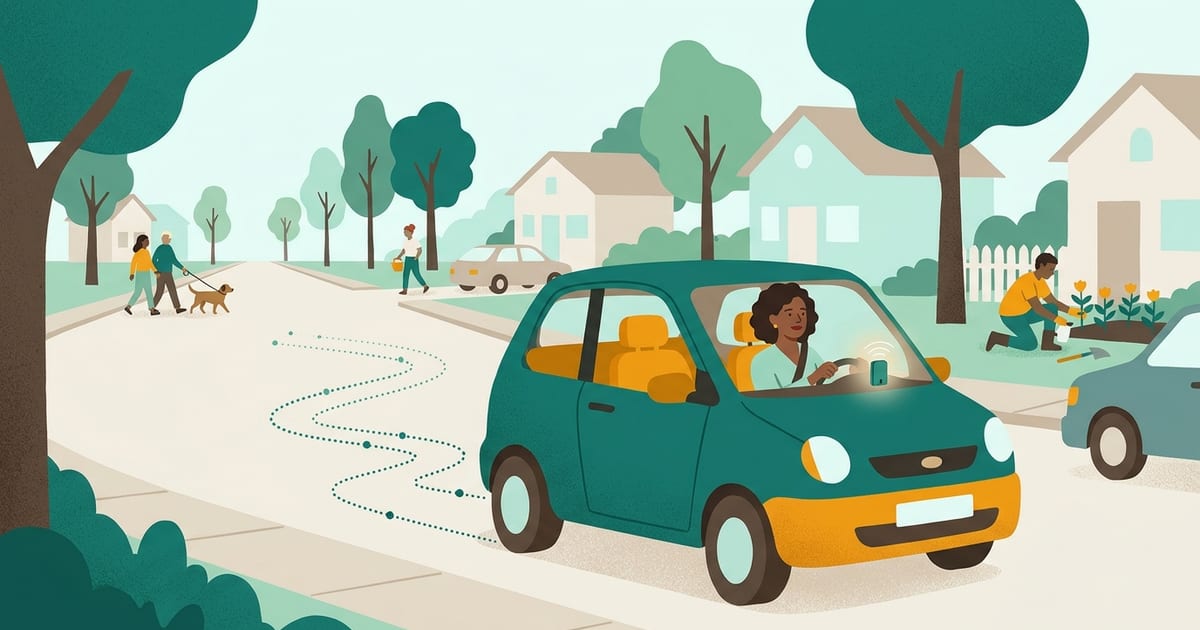
Conventional insurance estimates your exposure from a mileage band and a demographic profile. Pay-as-you-go measures it. Pay-per-mile measures distance; telematics measures behaviour. Both reward the same thing—driving less and driving calmly—but they suit different people, and the difference matters when choosing.
How to use this guide
- 1
Understand the mechanics
How it works explains base rates, per-mile rates, caps and scores.
- 2
Find your profile
Who saves and low-mileage drivers show whether the product fits.
- 3
Weigh the trade-offs
- 4
Compare properly
How to compare—including conventional quotes.
Start with the right guide
Each guide covers one decision in the pay as you go car insurance journey. Read them in order or jump to the one that matches your situation.
Guide
How Pay-As-You-Go Car Insurance Works
The two models behind pay-as-you-go car insurance—pay-per-mile and behaviour-based telematics—how premiums are calculated, and how the devices and apps collect data.
Guide
Pay-Per-Mile vs Telematics: Which Saves More?
A direct comparison of pay-per-mile and behaviour-based telematics—who each suits, how savings differ, and whether you can combine them.
Guide
Who Saves With Pay-As-You-Go Insurance
The driver profiles that benefit from pay-as-you-go pricing—remote workers, retirees, second cars, city dwellers, students—and the ones who should avoid it.
Guide
Car Insurance for Low-Mileage Drivers
How low-mileage drivers can pay less: pay-per-mile, conventional low-mileage discounts, telematics, and how to estimate and prove your annual mileage.
Guide
Privacy and Data in Pay-As-You-Go Insurance
What telematics devices and apps actually collect, how insurers use and share it, how long it is kept, and how to limit what you give up.
Guide
Pros and Cons of Pay-As-You-Go Car Insurance
A balanced assessment of pay-per-mile and telematics policies: savings, flexibility and feedback against variable bills, privacy, device hassles and surcharge risk.
Practical entries
Shorter, specific answers that sit inside the guides above.
Daily Mileage Caps on Pay-Per-Mile Insurance
How daily caps work on pay-per-mile policies, why they exist, typical cap levels, and how road trips are billed.
How to Calculate Your Break-Even Mileage for Pay-Per-Mile Car Insurance
Learn how to calculate your break-even mileage to determine if pay-per-mile car insurance will save you money compared to a standard fixed-rate policy.
What Driving Data Do Usage-Based and Telematics Car Insurers Track?
Understand exactly what driving data telematics and pay-as-you-go car insurers record, how devices gather it, and state rules governing driver privacy.
Is Pay-Per-Mile Car Insurance Worth It for Seniors and Retirees?
Learn how pay-per-mile car insurance works for retirees and senior drivers. See how reduced annual miles, base rates, and state rules affect your savings.
Telematics and Pay-Per-Mile Car Insurance for Young Drivers: Pros and Cons
Discover the pros and cons of telematics and pay-per-mile car insurance for young and teen drivers. Learn how driving scores and mileage impact premiums.
Quote finder
Compare pay as you go car insurance quotes for your situation
Questions & answers
How does pay-as-you-go car insurance work?
Pay-per-mile charges a base plus per-mile rate; telematics adjusts a premium by a driving score. See how it works.
Who saves with pay-per-mile?
Drivers under about 8,000 miles a year—remote workers, retirees, second cars, city residents. See who saves.
Is the coverage the same?
Yes. Only the pricing input differs.
What data does it collect?
Mileage at minimum; most programmes also collect speed, braking, time and location. See privacy.
Sources and references
Legal figures on this page (minimum limits, filing periods, statutory benefits) are checked against the primary law or the state insurance regulator listed below. Links and figures last verified Nov 2026.
- Background on: Pay-as-you-drive auto insurance (telematics) — Insurance Information InstituteIndependent researchUsage-based and per-mile pricing models, what telematics programmes measure, and state limits on their use.
- Nine ways to lower your auto insurance costs — Insurance Information InstituteConsumer guidanceShop at least three quotes; raising a deductible from $200 to $500 can cut collision/comprehensive cost 15–30%, $1,000 can save 40%+; drop physical damage on cars worth under 10× the premium; bundling, low-mileage and good-student discounts.
- What is covered by a basic auto insurance policy? — Insurance Information InstituteConsumer guidanceDefines bodily injury and property damage liability, MedPay, PIP, uninsured/underinsured motorist, collision, comprehensive and glass coverage.
- Insurance research and advocacy — Consumer Federation of AmericaConsumer guidanceConsumer-side research on auto insurance pricing, non-driving rating factors and affordability.
Practical guidance on this page is original editorial work. Cited sources support factual statements and do not endorse this site. Dollar ranges described as typical or illustrative are editorial estimates, not figures from these sources.
From the blog
Commentary, rate-trend notes and reader questions.
July 21, 2026
Reader Question: I Work Nights. Will Telematics Punish Me?
A night-shift nurse asks whether behaviour-based telematics will rate her unfairly for driving at 11pm and 7am.
March 17, 2026
Six Months on Pay-Per-Mile: What One Low-Mileage Household Paid
A reader shares six months of pay-per-mile bills for a car that mostly sits—and what the comparison against the old policy looked like.