Entry in Privacy and Data in Pay-As-You-Go Insurance
What Driving Data Do Usage-Based and Telematics Car Insurers Track?
Understand exactly what driving data telematics and pay-as-you-go car insurers record, how devices gather it, and state rules governing driver privacy.

By Jordan Ellis · Editor
Published
Answer in brief
Usage-based and telematics car insurance programs monitor specific vehicle telemetry, such as total mileage, vehicle speed, hard braking, rapid acceleration, and the time of day a vehicle travels. Insurers use this data to determine driving scores or bill per-mile charges, while state insurance regulations dictate how these telemetry metrics may influence your final rates.
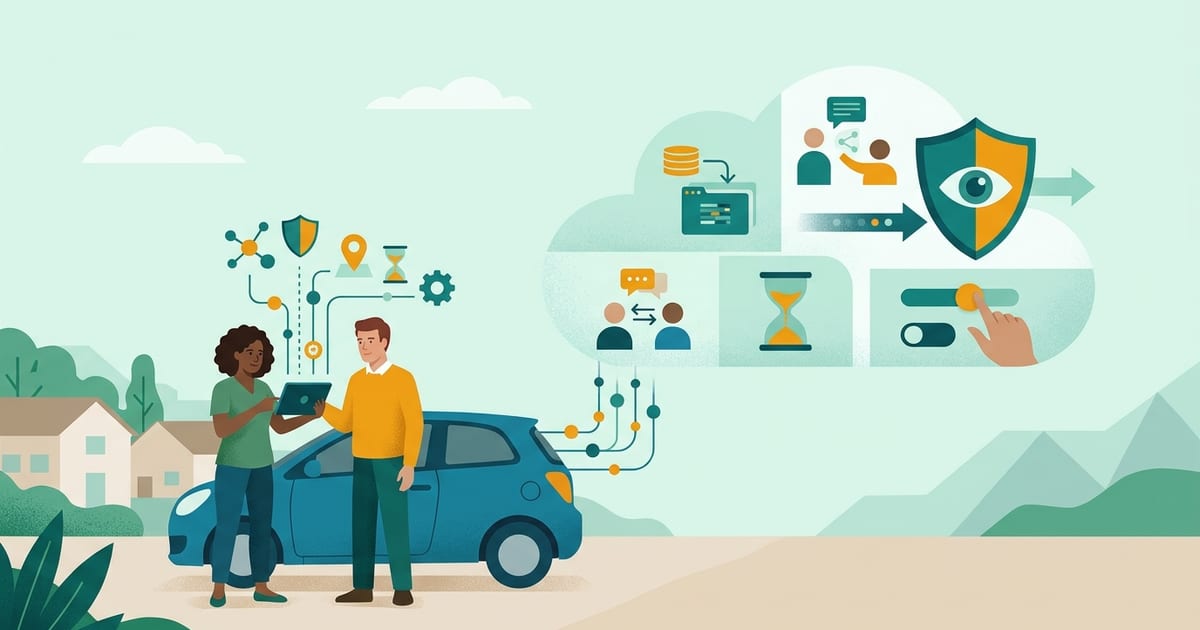
As insurers increasingly offer usage-based car insurance, drivers are frequently asked to share operational vehicle data in exchange for lower premiums. While conventional auto insurance relies on historical rating criteria—such as age, location, driving history, and vehicle type—telematics technology allows insurers to observe real-world vehicle operation directly. Understanding precisely what information telematics programs collect, how they collect it, and how state insurance regulations protect policyholders is critical before enrolling.
Data collection practices differ substantially depending on the type of policy you select. A pure pay-per-mile policy primarily tracks odometer distance to calculate monthly billing, whereas comprehensive behavior-based programs monitor driving maneuvers to assign an ongoing driving score. Below is a detailed breakdown of the driving data points gathered by telematics programs.
The Core Telemetry Points Monitored by Insurers
According to the Insurance Information Institute, telematics programs measure driving behaviors that actuarial studies link to crash probability. Insurers assess risk through several key telemetry categories recorded during every vehicle trip:
While pure pay-as-you-go programs focus almost exclusively on distance, behavior-based telematics programs integrate these acceleration and time-of-day variables into proprietary algorithms. For instance, crash statistics compiled by safety organizations show elevated crash rates during nighttime hours and among youthful demographics, leading insurers to treat late-night transit as an elevated exposure factor.
Hardware Collection Methods: OBD-II Devices vs Mobile Apps
Insurers capture telemetry using three primary mechanisms: a plug-in OBD-II device, a mobile smartphone application, or integrated connected-car data embedded directly into modern vehicle dashboards. Each mechanism carries different privacy and measurement implications.
Plug-in OBD-II devices connect to the diagnostic port beneath your dashboard. They access vehicle computer readings directly, accurately recording true engine odometer numbers and speed without tracking GPS location unless an internal cellular locator is enabled. Conversely, smartphone telematics apps use the phone's internal accelerometer, gyroscope, and location services. While convenient, apps require continuous background permissions and must differentiate between driving, riding as a passenger, or traveling on public transit.
State Regulatory Limits on Telematics and Rating Factors
State insurance departments, working within guidelines monitored by the National Association of Insurance Commissioners, strictly supervise which rating variables insurers may use to adjust rates. Not every state allows insurance companies to set rates using the same telematics factors.
In California, for example, California Insurance Code § 1861.02 mandates that auto insurance rates must be determined primarily by three mandatory factors: driving safety record, annual miles driven, and years of driving experience. Because of these strict statutory standards, California does not permit insurers to alter premiums based on continuous driving performance metrics like cornering or speed fluctuations, keeping usage-based options focused strictly on verified mileage.
Furthermore, while many traditional rating components like credit-based insurance scoring are common countrywide—with Insurance Information Institute data showing credit scores lowered premiums for approximately 57% of drivers in state regulatory reviews—telematics offers an alternative where pricing reflects actual vehicle utilization rather than financial history.
Steps to Review an Insurer's Telematics Data Agreement
Before plugging a monitoring device into your vehicle or downloading a telematics application, take deliberate steps to review the program's terms and privacy disclosures:
- 1
Verify Mileage-Only vs Behavior Tracking
Confirm whether the insurer is offering a pure pay-per-mile policy that tracks only miles driven, or a behavior-based policy monitoring braking, speed, and handling.
- 2
Check the Surcharge Policy
Ask if poor driving scores can result in a rate surcharge at renewal, or whether the program guarantees that your rate will not increase above the standard baseline.
- 3
Review Location and GPS Practices
Examine whether the insurer collects real-time geographic location coordinates or strictly measures velocity, deceleration, and distance traveled.
- 4
Confirm Trip Correction Procedures
Ensure smartphone-based programs allow you to classify trips when you were a passenger in someone else's car or riding public transit to avoid unearned penalties.
To learn more about comparing plans that track driving performance versus those that track mileage alone, read our in-depth analysis on pay-per-mile vs telematics or explore our guide to who saves with pay-as-you-go insurance.
Questions & answers
Can telematics insurance raise my rates?
It depends on the carrier and state rules. Some usage-based programs are discount-only, meaning poor scores cannot increase your premium above baseline rates. Other programs adjust rates up or down based on driving score results.
Does pay-per-mile car insurance track where I drive?
Pure pay-per-mile programs generally record distance rather than GPS coordinates. However, device capabilities vary, so you should check the carrier's privacy agreement regarding location tracking.
What happens if a telematics app records me when I am a passenger?
Most smartphone telematics apps provide a trip-review window (usually 14 to 30 days) allowing you to mark trips where you were a passenger or using public transportation so they do not impact your driving score.
Do all states allow telematics driving scores?
No. Some states enforce strict rating criteria. For example, California law requires rates to be based primarily on driving record, annual mileage, and experience, prohibiting behavioral telematics scoring.
Terms: Telematics (usage-based insurance), OBD-II device, Connected-car data, Driving score, Pay-per-mile insurance
Sources and references
Legal figures on this page (minimum limits, filing periods, statutory benefits) are checked against the primary law or the state insurance regulator listed below. Links and figures last verified Nov 2026.
- Insurance Code § 1861.02 — rating factors and Good Driver Discount — California Legislative Information, Cal. Ins. Code § 1861.02Primary lawRates must be determined by, in decreasing order of importance, driving safety record, annual miles driven and years of driving experience; optional factors may follow. Good Driver Discount policies must be at least 20% below the rate otherwise charged.
- Background on: Pay-as-you-drive auto insurance (telematics) — Insurance Information InstituteIndependent researchUsage-based and per-mile pricing models, what telematics programmes measure, and state limits on their use.
- Background on: Insurance scoring — Insurance Information InstituteIndependent researchWhat credit-based insurance scores are; Arkansas regulator data showing credit lowered premium on ~57% of auto policies and raised it on ~23%.
- Automobile financial responsibility limits by state — Insurance Information Institute (2023)Statistical dataCompulsory coverages and minimum liability limits by state (table dated December 2023 — several states have raised limits since; see statute entries).
- What determines the price of an auto insurance policy? — Insurance Information InstituteConsumer guidanceRating factors: driving record, mileage, location, age, gender, vehicle, credit-based insurance score, coverage choices. Notes ZIP-code rating is prohibited in California and Michigan and gender rating is prohibited in seven states.
- Consumer insurance information — National Association of Insurance CommissionersConsumer guidancePlain-language guides from the body of state insurance regulators; links to every state's insurance department and complaint process.
- Insurance research and advocacy — Consumer Federation of AmericaConsumer guidanceConsumer-side research on auto insurance pricing, non-driving rating factors and affordability.
- How much auto coverage do I need? — Insurance Information InstituteConsumer guidanceWhy state minimums are a floor; choosing liability limits that protect assets; when collision and comprehensive are worth keeping.
Practical guidance on this page is original editorial work. Cited sources support factual statements and do not endorse this site. Dollar ranges described as typical or illustrative are editorial estimates, not figures from these sources.