Entry in How Pay-As-You-Go Car Insurance Works
Daily Mileage Caps on Pay-Per-Mile Insurance
How daily caps work on pay-per-mile policies, why they exist, typical cap levels, and how road trips are billed.

By Jordan Ellis · Editor
Published · Updated
Answer in brief
Most pay-per-mile programmes stop counting miles after a daily cap—typically 150 to 250 miles—so a long road trip costs at most the cap times the per-mile rate for each day. The cap exists to keep the product usable for occasional long drives without making it attractive to high-mileage commuters, whose daily totals rarely reach it.
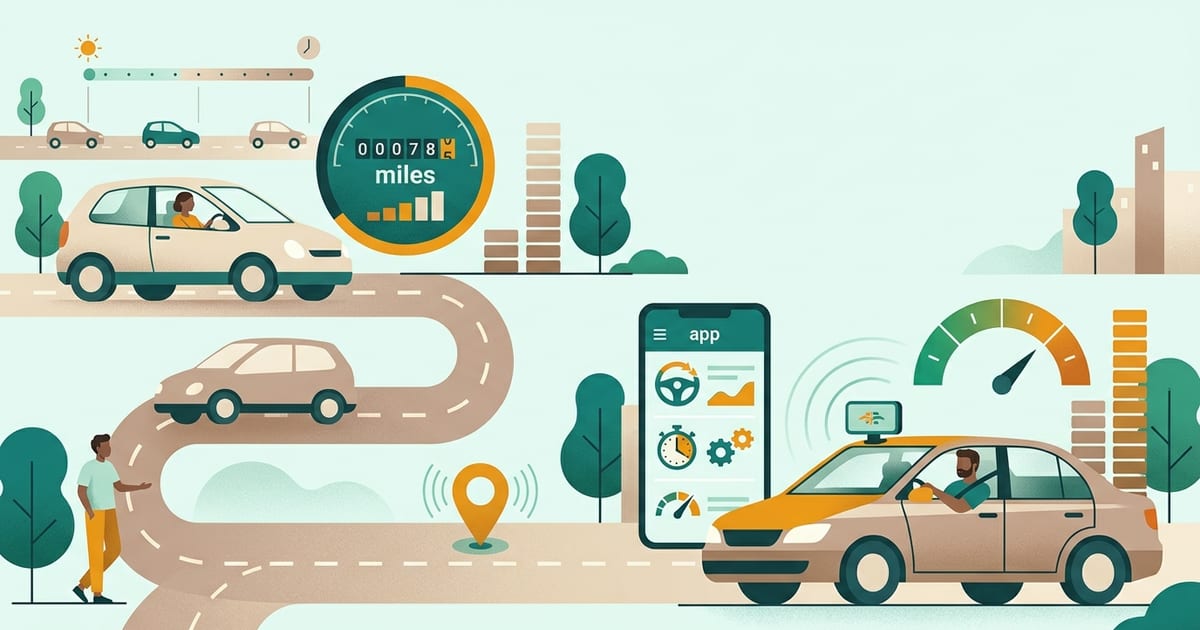
How a capped road trip is billed
Suppose a 250-mile cap and a 6¢ rate. A 600-mile driving day is billed as 250 miles—$15. A week-long trip of 2,000 miles spread over four driving days costs at most 4 × $15 = $60 in per-mile charges, plus the normal base rate.
What the cap does not do
It does not help a commuter. Driving 60 miles a day, 250 days a year, never reaches the cap and adds up to 15,000 miles—well above the point where per-mile pricing stops saving money. See who saves.
Ask before enrolling
Caps vary by programme and sometimes by state. Confirm the cap, whether it applies per calendar day or per 24 hours, and how trips across time zones are counted.
Terms: Per-mile rate, Pay-per-mile insurance
Sources and references
Legal figures on this page (minimum limits, filing periods, statutory benefits) are checked against the primary law or the state insurance regulator listed below. Links and figures last verified Nov 2026.
- Background on: Pay-as-you-drive auto insurance (telematics) — Insurance Information InstituteIndependent researchUsage-based and per-mile pricing models, what telematics programmes measure, and state limits on their use.
- What determines the price of an auto insurance policy? — Insurance Information InstituteConsumer guidanceRating factors: driving record, mileage, location, age, gender, vehicle, credit-based insurance score, coverage choices. Notes ZIP-code rating is prohibited in California and Michigan and gender rating is prohibited in seven states.
- What is covered by a basic auto insurance policy? — Insurance Information InstituteConsumer guidanceDefines bodily injury and property damage liability, MedPay, PIP, uninsured/underinsured motorist, collision, comprehensive and glass coverage.
Practical guidance on this page is original editorial work. Cited sources support factual statements and do not endorse this site. Dollar ranges described as typical or illustrative are editorial estimates, not figures from these sources.